I had been a wrestling coach for thirty years. I knew when a man was trying to intimidate me.
I also knew when to stay calm.
I reached into my jacket pocket and pulled out my phone. My right hand was still weak from the stroke, and it took me a few tries to unlock the screen.
“Who are you calling?” Cecil asked.
“The sheriff,” I said. “I’m my son’s legal guardian. Court-appointed. My wife had no right to sign anything. And neither do you.”
Cecil’s smile disappeared.
“You’re bluffing.”
“I have the papers in my brother’s truck. Want to see them?”
He didn’t answer. He turned around, walked back into the farmhouse, and slammed the door.
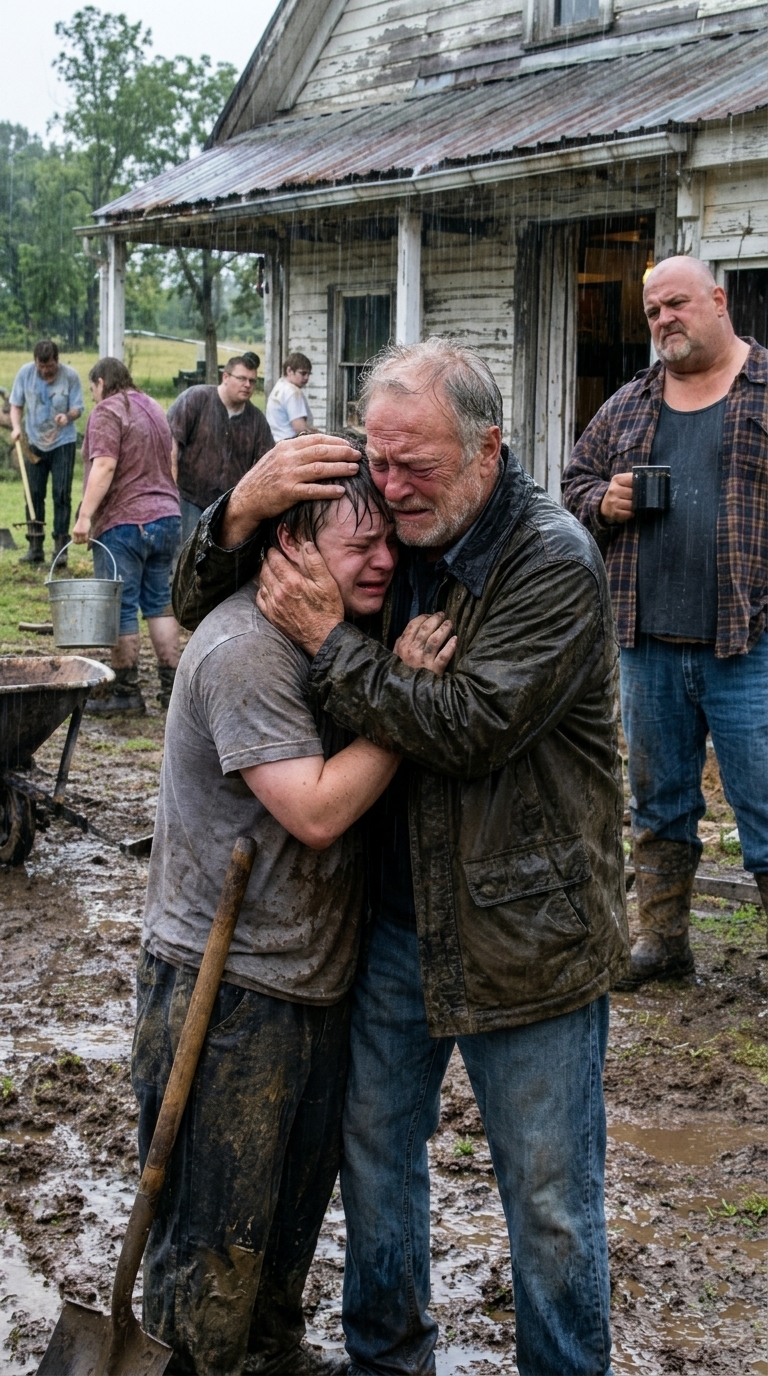
Twenty minutes later, three sheriff’s cars pulled into the muddy driveway.
When the deputies entered that farmhouse, one of the young officers came back outside and threw up in the yard.
Inside were nine adults with disabilities. Down syndrome. Autism. Cerebral palsy. Among them was a woman in her fifties who couldn’t speak at all.
They were sleeping on mattresses on the floor. There was one bathroom, the toilet was broken, and the refrigerator had a padlock on it.
On the kitchen table, deputies discovered a ledger.
Nine names.
Nine disability checks every month.
Cecil kept most of the money and paid referral fees to the people who brought residents to him.
Three of those payments had gone to Luann.
Every resident was taken to a hospital that night.
Kellan rode in the ambulance with me. He held my hand the entire way.
“Dad, are we going home?”
“Yes, buddy. We’re going home.”
Cecil was arrested for operating an unlicensed care facility, abusing vulnerable adults, and fraud. The state shut down Sunny Acres the following week.
Luann was arrested two days later.
She cried. She told investigators she didn’t know how bad the place was. She said she’d only needed a break.
The detective showed her the ledger.
Three referral payments. Six hundred dollars each. And Kellan’s disability checks going directly into her personal account.
She stopped crying.
I filed for divorce from my hospital bed during my follow-up appointment.
Kellan came home. He took a long, hot bath and ate three plates of spaghetti. Then he walked into his bedroom, saw that it was still empty, and sat down on the bare mattress.
He didn’t cry.
He just looked sad.
The next morning, I made a few phone calls.
By that afternoon, eleven of my former wrestlers were standing in my driveway. They were grown men now—mechanics, teachers, a firefighter, a lawyer. Boys I’d coached when they were fifteen.
They carried in a new bed. New sheets. Country music posters. A stereo.
One of them, Marvin, owned a furniture store. He brought a recliner and placed it right next to the window.
“For when you want to watch the birds, Kellan,” he said.
Kellan hugged every single one of them.
The lawyer, a quiet man named Cash, helped the families of the other eight residents file lawsuits. Every one of them got their benefits back.
It’s been a year now.
Kellan went back to work at the grocery store. His manager threw him a welcome-back party. He’s the best bagger they’ve ever had.
I still walk with a cane. Some days, my right hand still shakes.
But every morning, Kellan and I walk Rex around the block together. Slowly. One step at a time.
At the curbs, he holds my arm.
“I got you, Dad,” he says.
He’s right.
He does.
THE END.
The most vulnerable among us depend on us to show up. Check on them. Ask the hard questions. Never assume someone else is looking after them.
What would you have done if you found your child at that farmhouse? Tell us in the replies.